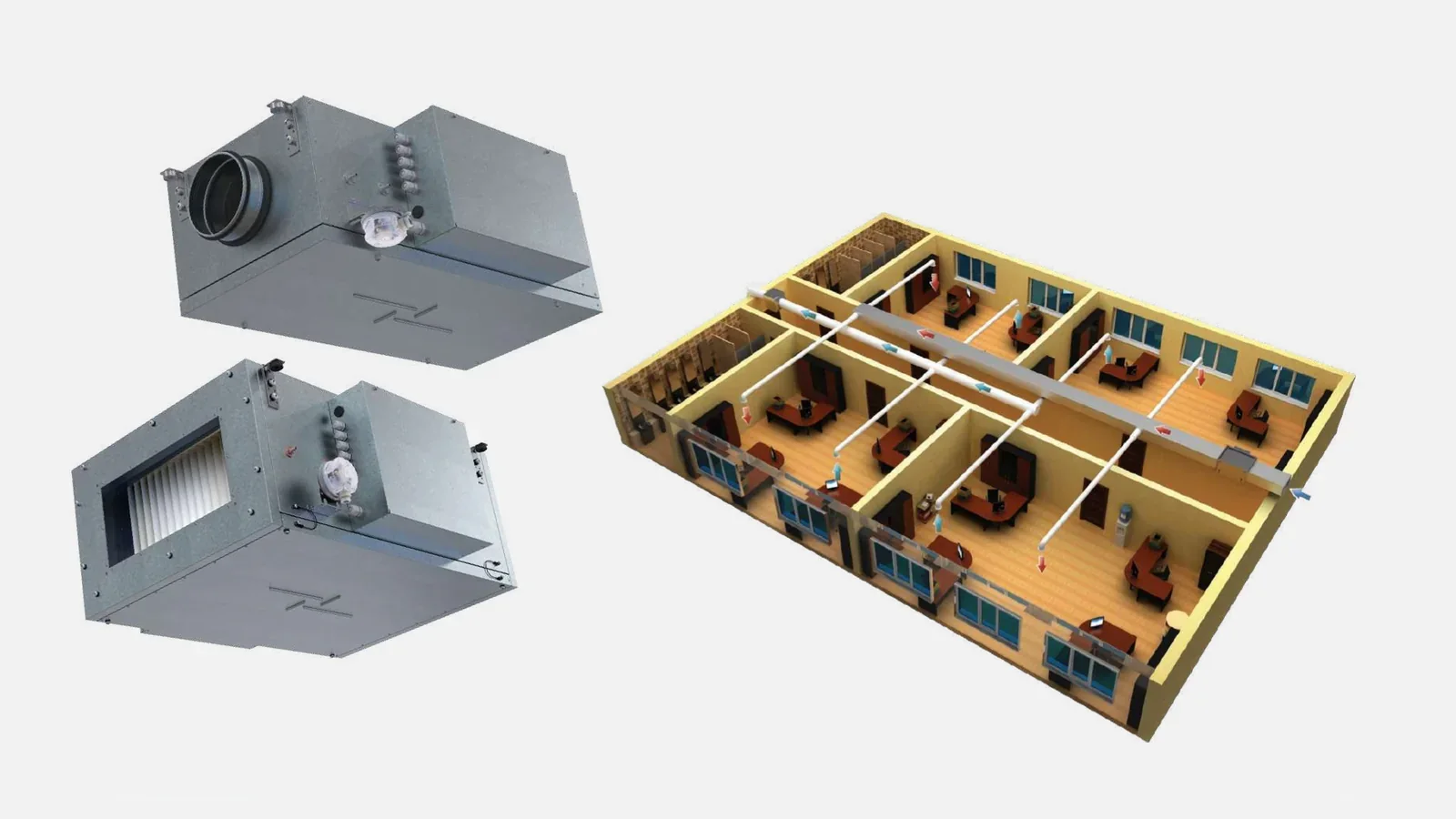
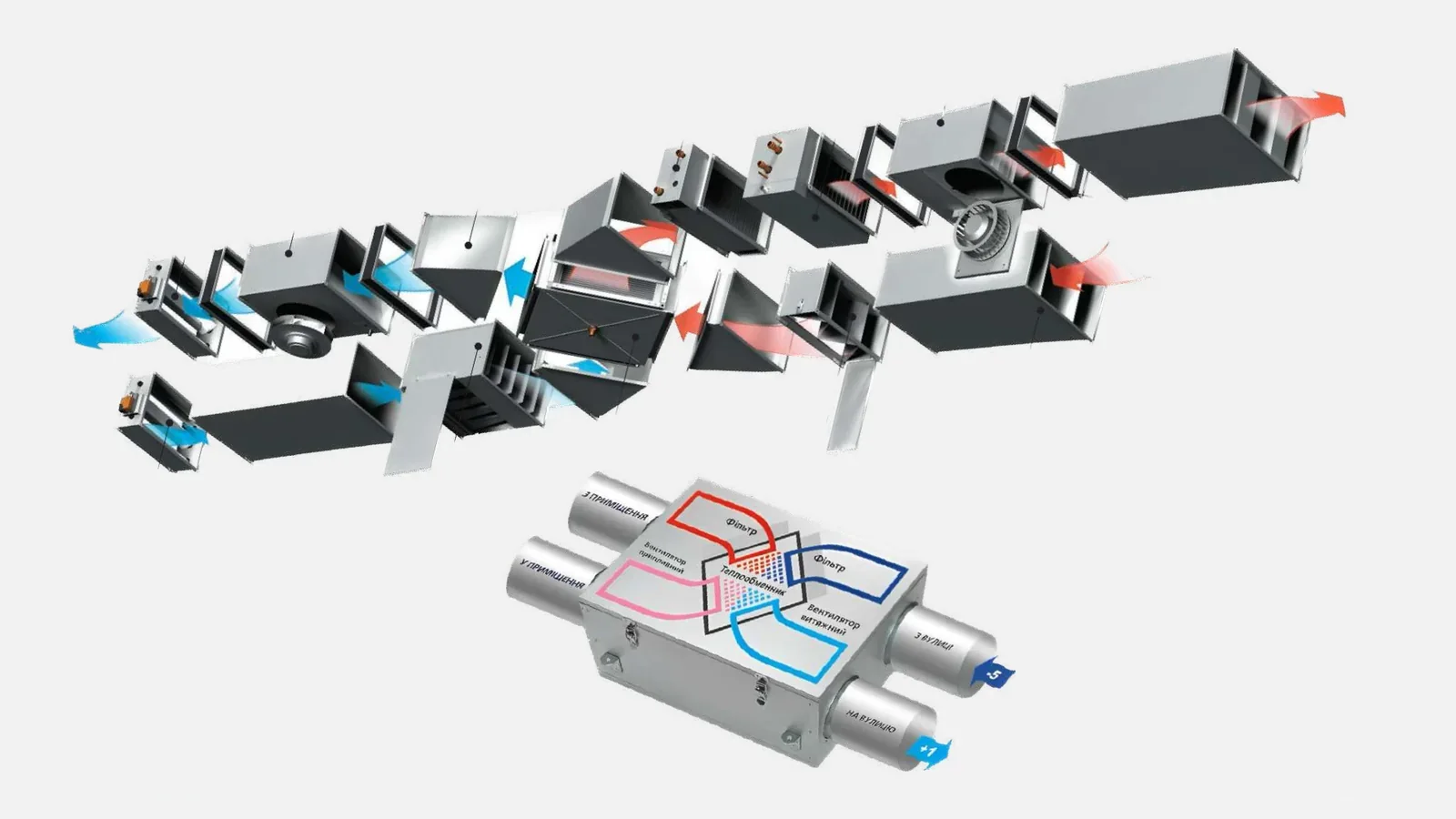
How to choose a ventilation or air conditioning system for a house or apartment

A practical guide to choosing between ventilation, air conditioning, or a combined system for a house or apartment.

Introduction

Introduction

A practical guide to choosing ventilation and air conditioning for a house or apartment.

Properly selected ventilation and air conditioning affect not only temperature, but also air quality, noise level, energy consumption, and ease of operation. This article reviews the main system types, their advantages and limitations, and the stages of selection, design, installation, and service maintenance for a house or apartment.

Purpose and importance

The purpose of these systems is to provide a stable supply of fresh air, remove pollutants, and maintain a comfortable indoor temperature. A well-designed solution helps avoid drafts, excessive noise, unnecessary energy use, and future service issues.

Ventilation

Ventilation systems and their purpose

Exhaust ventilation system

Purpose: removes stale air from bathrooms and kitchen zones.

Central supply and exhaust general ventilation system

Purpose: supplies fresh outdoor air to the living space after preparing it in advance: filtering it and heating or cooling it to the required temperature.

Exhaust ventilation system

An exhaust ventilation system removes polluted air from bathrooms and kitchen zones. It includes a fan that extracts air and discharges it outdoors to improve indoor air quality and remove odors and pollutants.
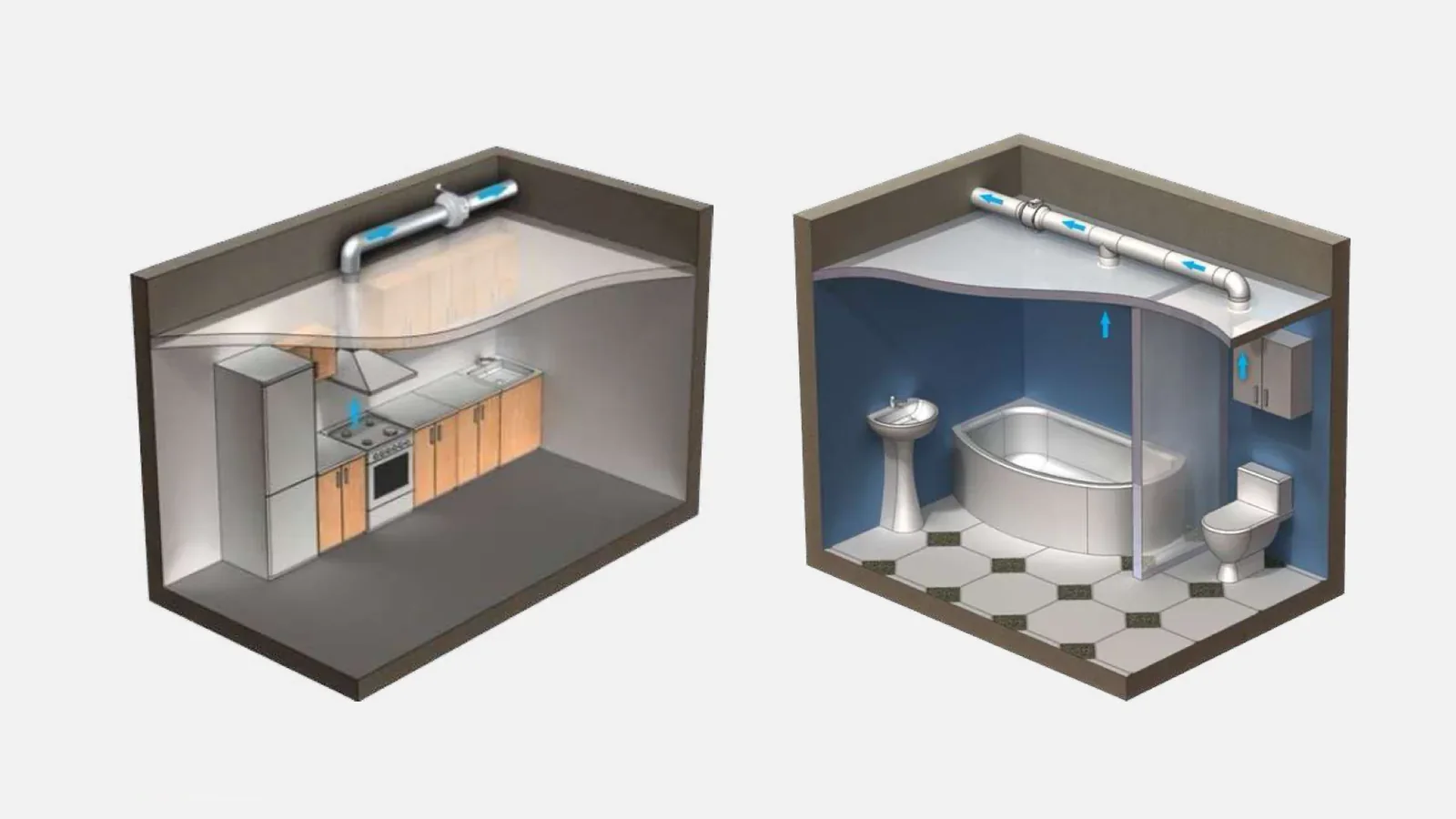
Diagram of an exhaust ventilation system for a home
Exhaust ventilation system

Central supply and exhaust general ventilation system

A central supply and exhaust general ventilation system includes various types, brands, and solutions. Several popular and cost-effective options include:
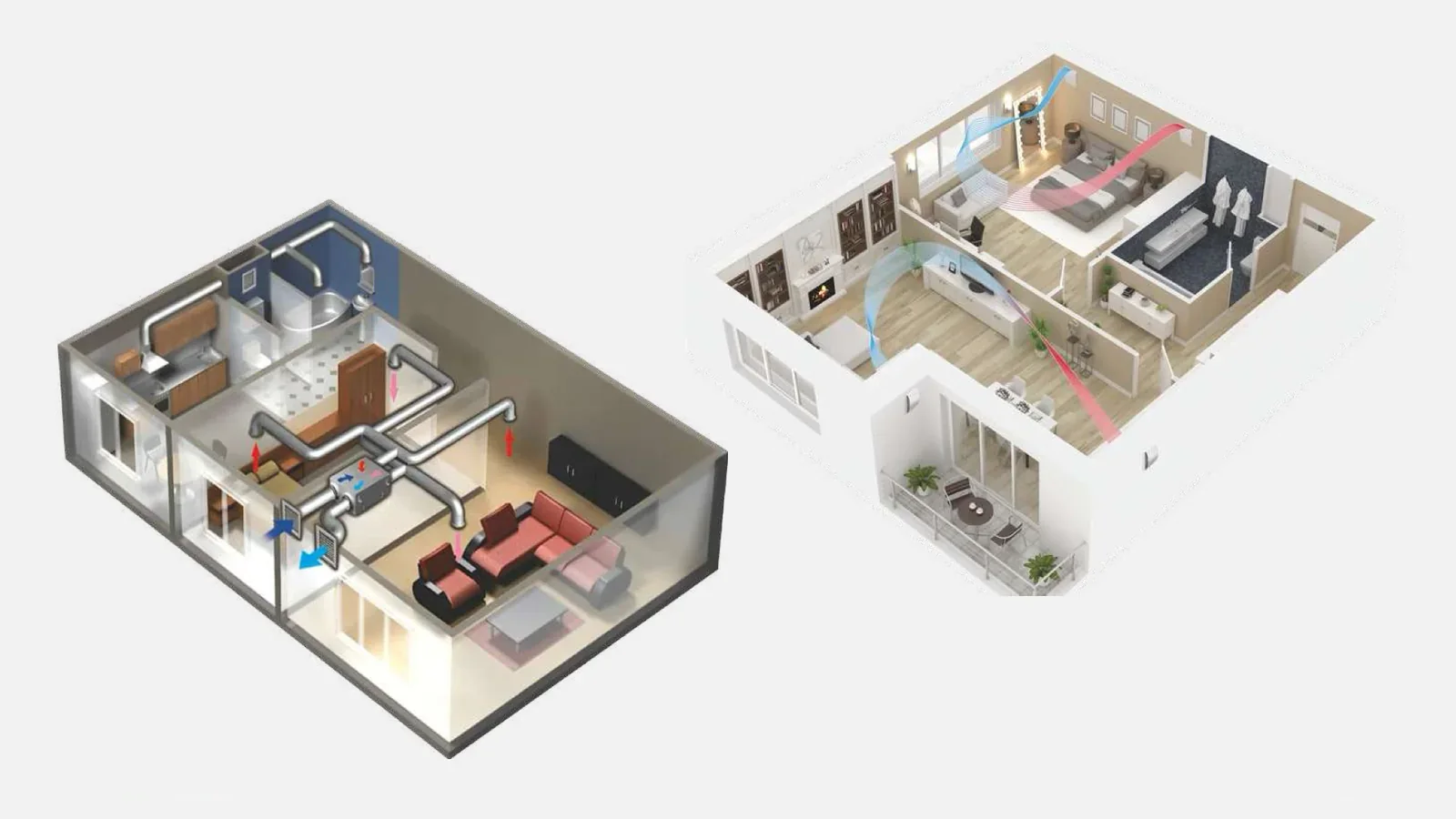
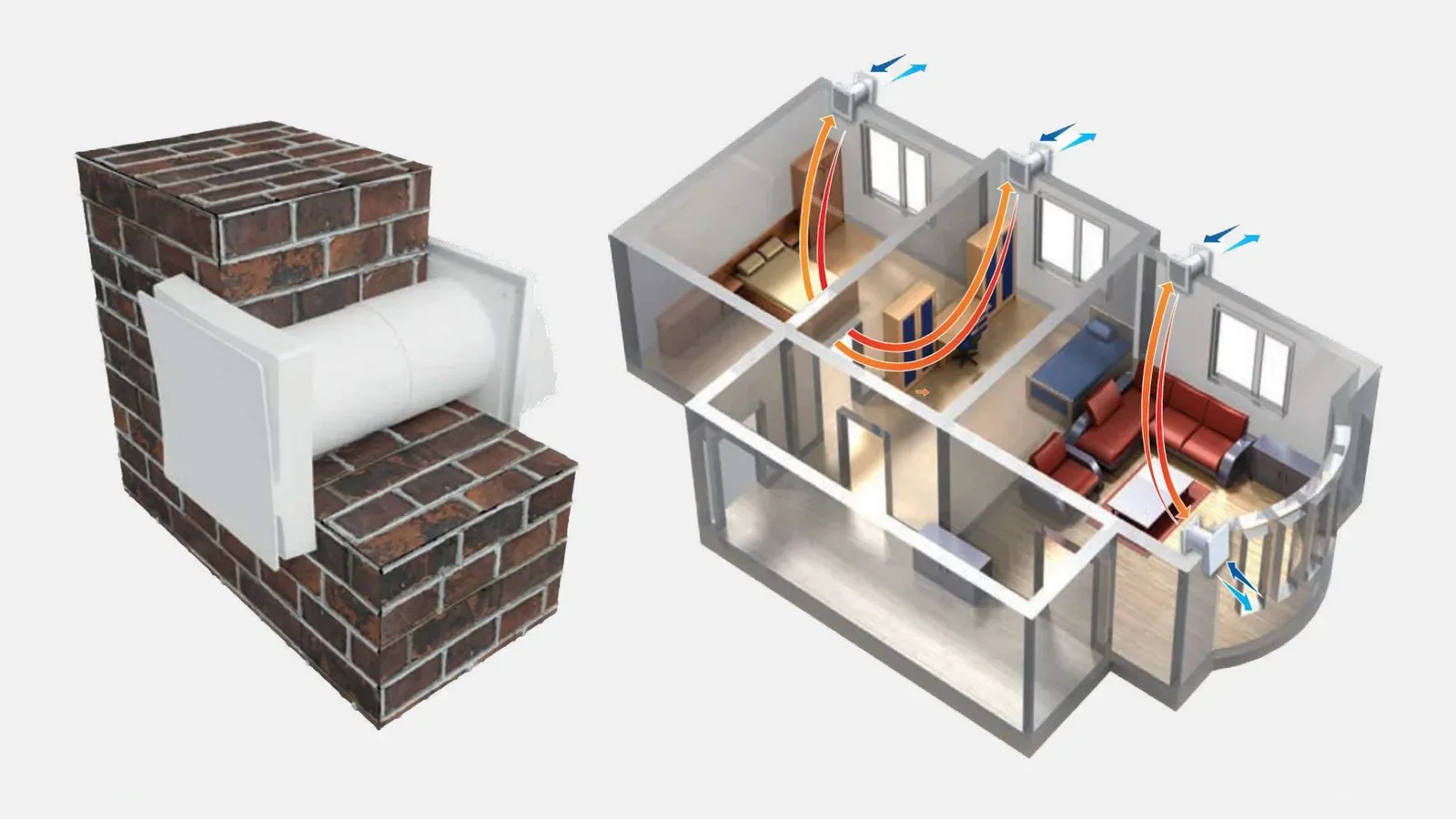
  • Decentralized ventilation units (wall ventilators): these systems are easy to install and use.
  • Supply air units: they provide fresh outdoor air without an exhaust system.
  • Central supply and exhaust systems: these systems have ducts that distribute air throughout the house.
Example of a central supply and exhaust general ventilation system
Central supply and exhaust general ventilation system

Decentralized ventilation units

Positive aspects

  • Easy to install and operate.
  • Provide fresh air in individual rooms.

Negative aspects

  • Usually have lower potential for effective outdoor air exchange. This may require more ventilation units for each room or several units for one room.
  • Higher noise level may create discomfort for occupants.
  • Some systems may require additional room heating in winter because they do not have an additional heating system, which may cause drafts.
Example of a decentralized ventilation unit
Decentralized ventilation units

Supply air units

Positive aspects

  • Supply air units provide a stable supply of fresh air, helping maintain a healthy and comfortable indoor environment.

Negative aspects

  • Supply systems do not have heat recovery, which means they need more energy in winter to heat the fresh air.
  • Supply systems have limited potential for effective general air exchange in a room compared with central ventilation systems.
Example of a supply air ventilation unit
Supply air units

Central supply and exhaust ventilation units

Positive aspects

  • A central ventilation system can provide stable and high-quality air exchange throughout the house, improving occupant comfort and well-being.
  • Central systems can be very effective in maintaining air quality and reducing energy consumption, which can significantly improve the economic efficiency of the house.

Negative aspects

  • Installing a central ventilation system is costly.
  • Central systems are complex to install and configure, and they require regular service maintenance.
Example of a central supply and exhaust ventilation unit
Central supply and exhaust ventilation units

The final choice of ventilation system will depend on the specific needs, budget, and personal preferences of the occupants of the house or apartment.

Ventilation system components

  • Ventilation unit (central unit package: filters, automation, heat recovery, heating elements, airtight dampers)
  • Fans for removing polluted air from bathrooms and, if needed, kitchen zones.
  • Air ducts: a system of channels that distribute air through the rooms. Air ducts provide even air distribution.
  • Ventilation grilles and diffusers: components located in rooms that serve to distribute fresh air evenly and collect stale air.

These components work together to provide an effective and high-quality ventilation system in a house or room.
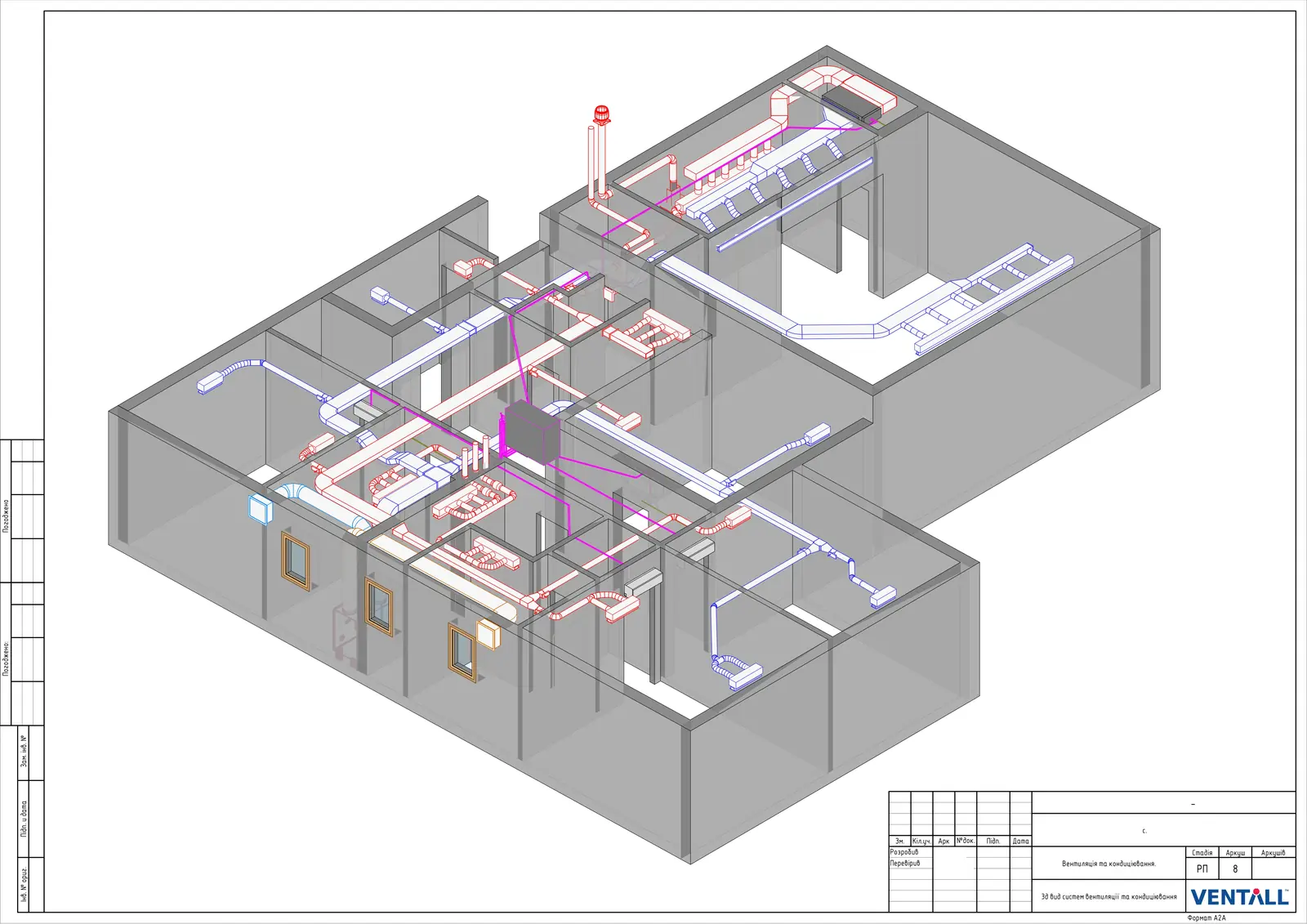
3D view of ventilation and air conditioning systems in a house
3D view of the systemMore about ventilation and air conditioning system components

Air conditioning

Air conditioning system

An air conditioning system includes different types intended for cooling and heating a room.

  • Split system
  • Multi-split system
  • Multi-zone system

These types of air conditioning systems have their own advantages and disadvantages, and the choice depends on your specific property, needs, and budget.

Split system

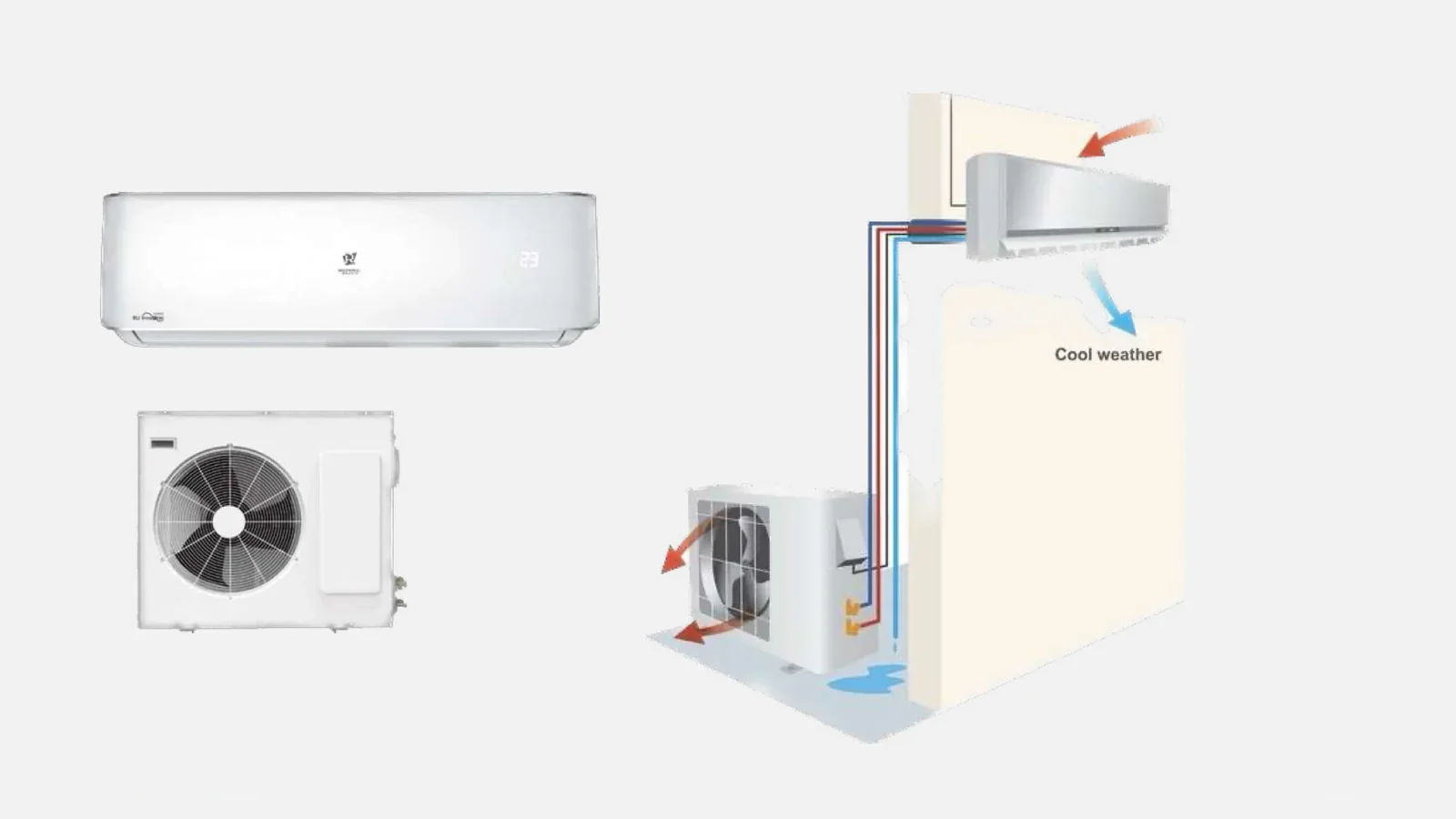
This is one of the most common types of air conditioning systems. It consists of two parts: an indoor unit installed inside the room and an outdoor unit placed outside or on the building roof. A split system is intended for air conditioning one specific room.
Positive aspects

  • Installation convenience: easy to install.

Negative aspects

  • A large number of outdoor units: if you want to air condition several rooms, this may result in many outdoor units that take up a lot of space.
Example of a split air conditioning system
Split system

Multi-split system

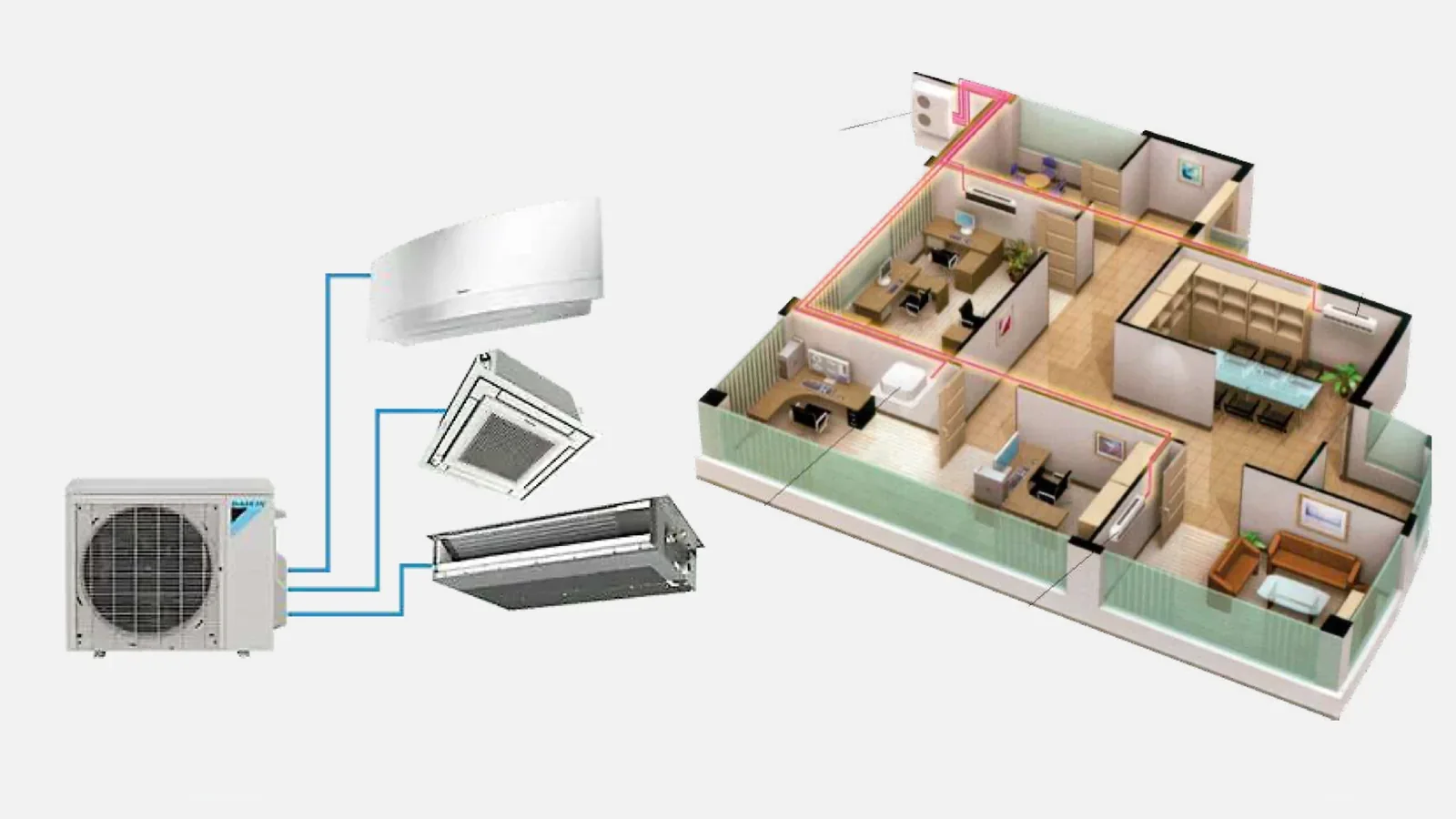
This system allows several indoor units to be connected to one outdoor unit. This means you can air condition several rooms with one system, which is very convenient and economical from the outside.
Positive aspects

  • Fewer outdoor units: compared with separate split systems
  • Cost efficiency: usually a more economical alternative to installing separate split systems for each zone.

Negative aspects

  • Cost: it can be expensive, especially as the number of indoor units increases.
Example of a multi-split air conditioning system
Multi-split system

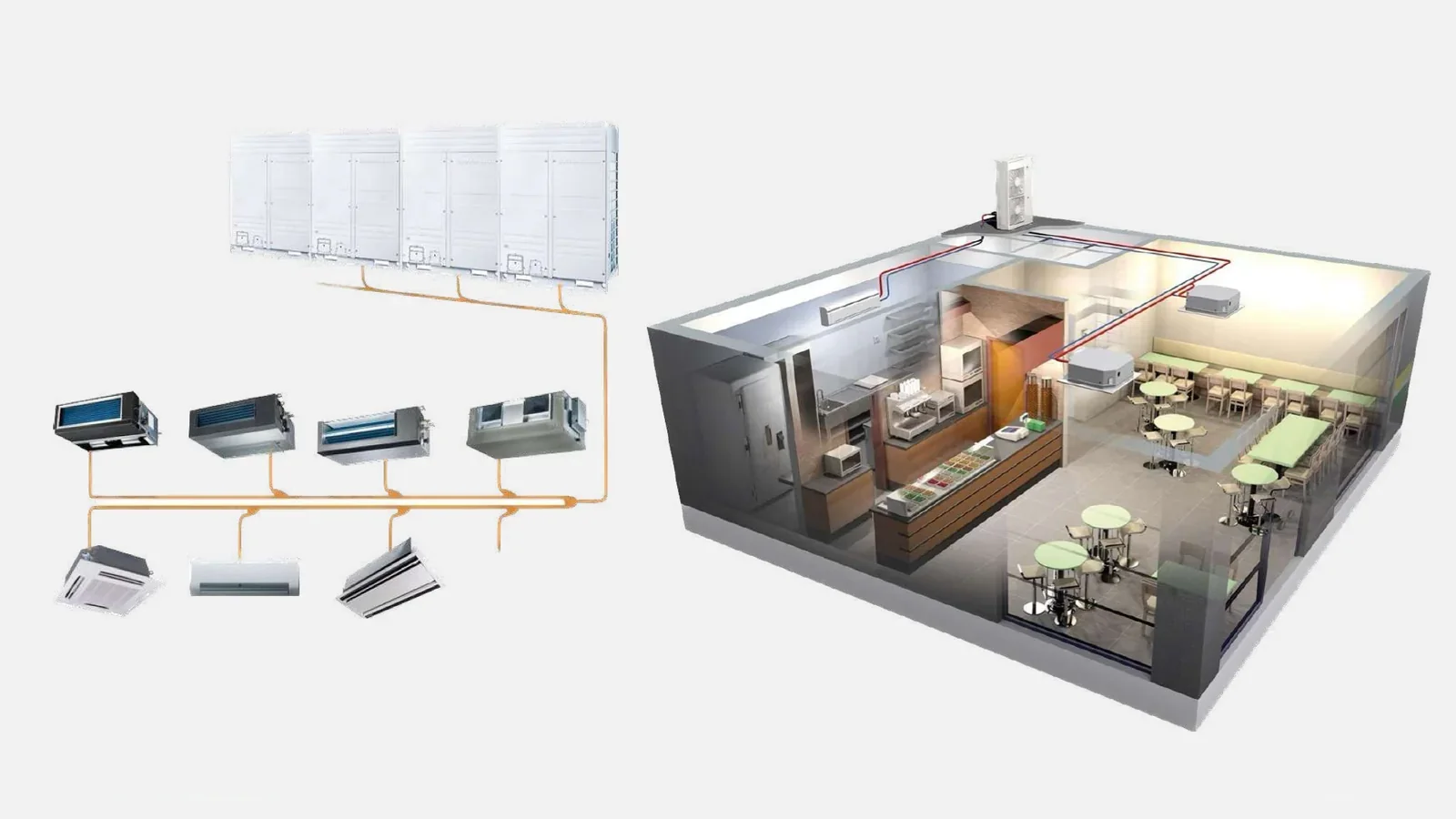
Multi-zone system

Multi-zone systems are similar to multi-split systems, but they provide more flexibility in control. They allow air conditioning in separate zones or rooms with individual thermostats, which gives greater temperature accuracy and control.
Positive aspects

  • Reduced energy losses: only the zones that require air conditioning actively use energy.

Negative aspects

  • Installation and service complexity: the system can be complex to install and maintain, especially in large buildings.
  • Cost: it usually requires a larger budget for installation and service.
Example of a multi-zone air conditioning system
Multi-zone system

Types of indoor units

Air conditioning systems have different types of indoor units installed in the room to distribute cooled or heated air.

  • Standard indoor unit (wall-mounted)
  • Cassette indoor unit
  • Ducted indoor unit
  • Ceiling and floor-mounted indoor unit types

The choice of indoor unit type depends on the needs of your room, design, and budget. It is also important to consider whether the outdoor unit of the air conditioning system can support this indoor unit type.

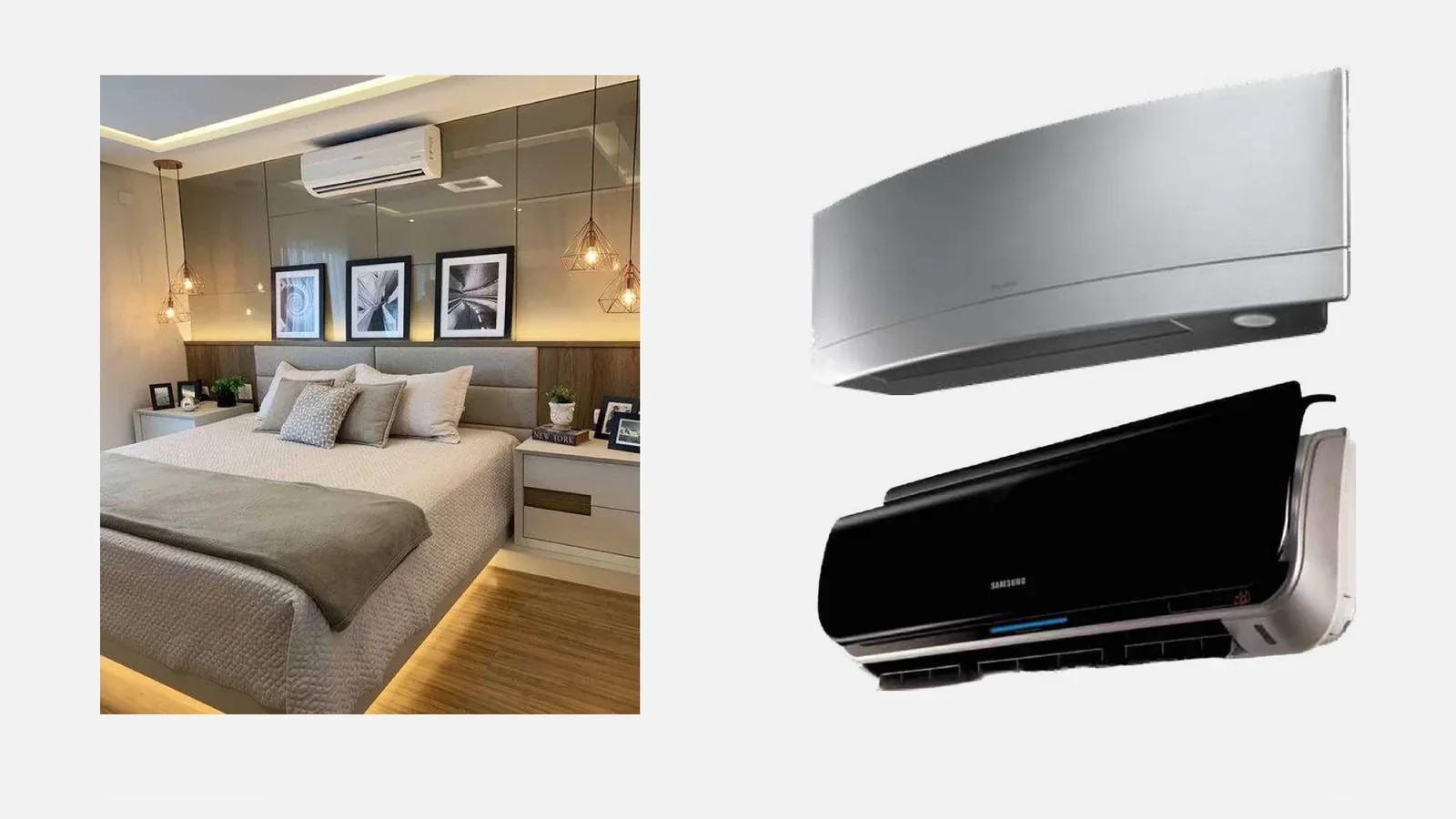
Wall-mounted indoor unit

This is the most common type of indoor unit. It is mounted on a wall or floor and distributes conditioned air in one room.
Positive aspects

  • Convenient installation on a wall or floor.
  • Suitable for small and medium-sized rooms.

Negative aspects

  • Visible on the wall, which may affect the room design.
  • May be slightly noisier compared with ducted indoor units.
Wall-mounted indoor unit of an air conditioner
Wall-mounted indoor unit

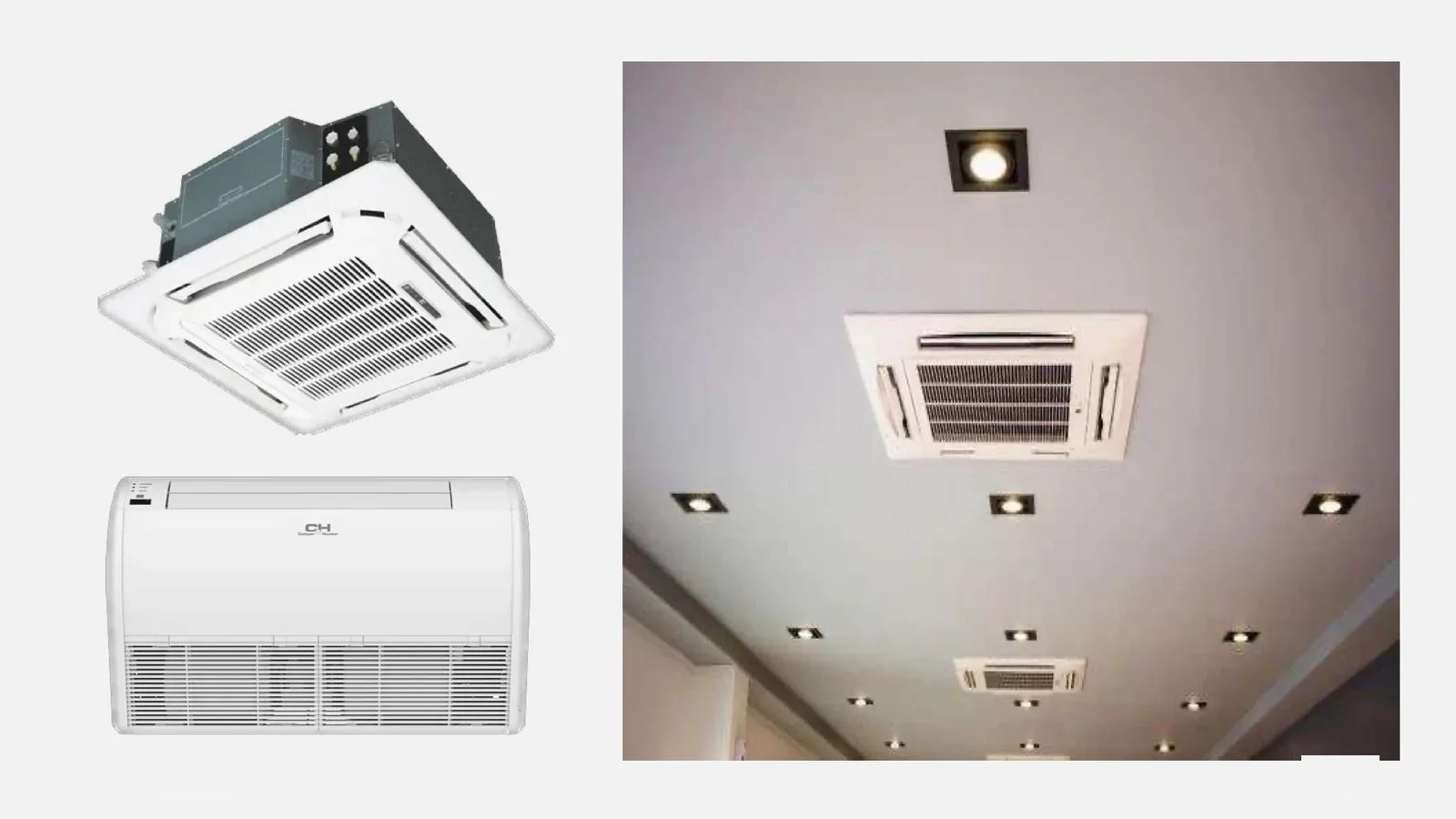
Cassette and ceiling indoor unit

This type of unit is mounted in the ceiling or on the ceiling and is usually used for air conditioning larger rooms. It distributes air in four directions, providing even cooling.
Positive aspects

  • Suitable for rooms with high ceilings and effective in large rooms.

Negative aspects

  • Visible on the ceiling, which may affect the design
  • May be noisier compared with ducted units
  • Higher cost compared with standard units
  • Can be used for air conditioning rooms with high ceilings
Cassette and ceiling indoor unit of an air conditioner
Cassette and ceiling indoor unit

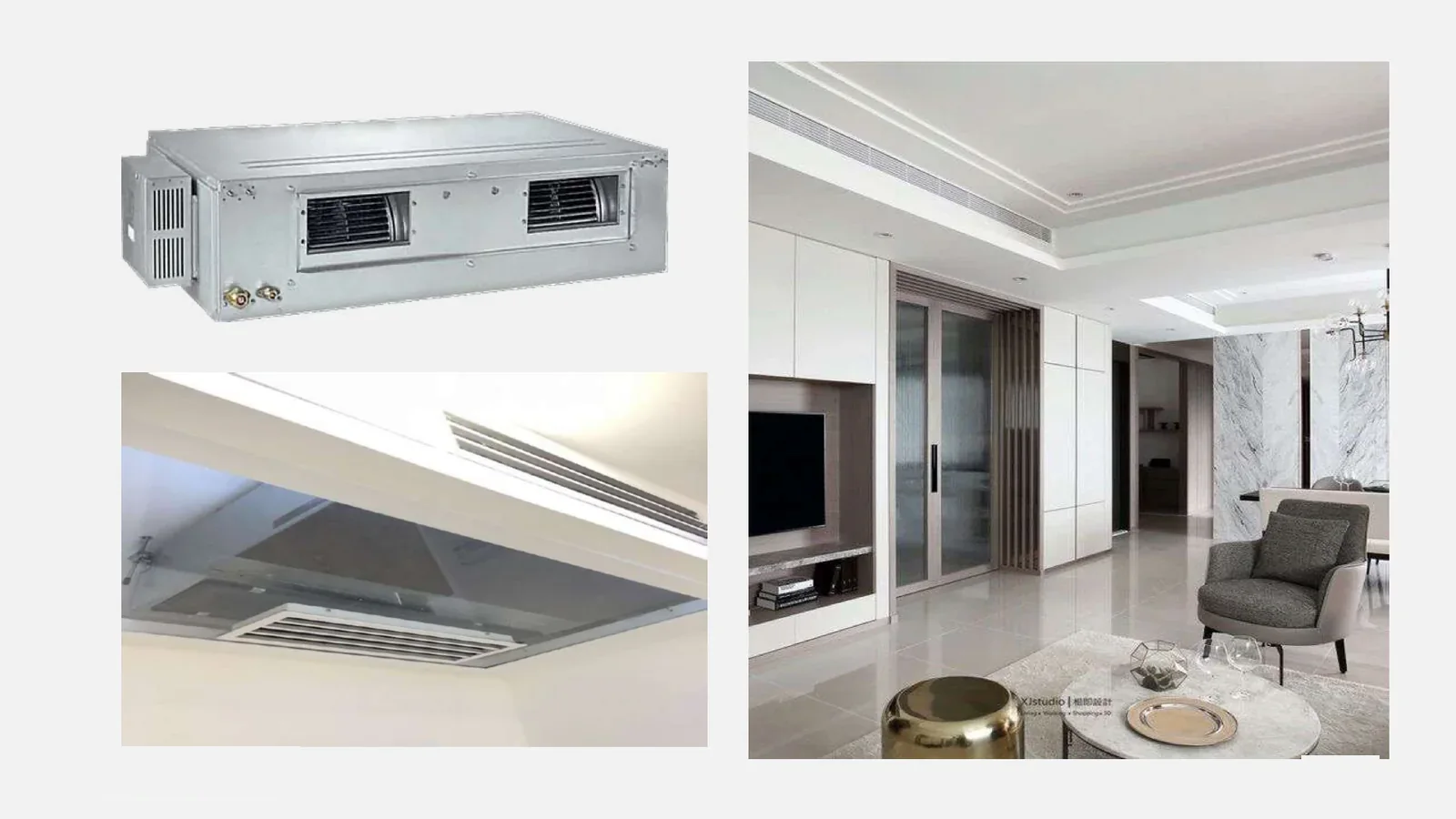
Ducted indoor unit

Ducted units are hidden in special ducts or under the floor and distribute air through ventilation openings in the ceiling. They are ideal for rooms where it is important to preserve aesthetics and keep the air conditioner unobtrusive.
Positive aspects

  • Hidden in special ducts or under the ceiling, which makes them less visible and less noisy for users.
  • Suitable for properties with high aesthetic requirements

Negative aspects

  • More complex installation and service because of the hidden location
  • Requires additional elements such as an air duct and internal grilles
  • May have a higher cost compared with standard units
Ducted indoor unit of an air conditioner
Ducted indoor unit

Selection criteria

Criteria and advice for choosing the optimal air conditioning system

  • Room size and type, aesthetic requirements
  • Budget: define your budget for installing and maintaining the air conditioning system.
  • Air quality: it is important to consider systems with filters that can clean the air from allergens, dust, and other pollutants.
  • Noise level: if noise is a concern, choose a system that operates quietly.
  • Warranty and service: check what warranties and service support the system manufacturer provides.
  • Advice from specialists: consult professionals who can provide advice on system selection and installation.

Combined systems

Combining ventilation with air conditioning or installing separate systems.

This choice is better made by evaluating the specific needs and characteristics of the building or property.

  • Combining ventilation with air conditioning.
  • Installing separate ventilation and air conditioning systems.

Combining ventilation with air conditioning

For large buildings, commercial or industrial properties where a powerful and large-scale system is required, combining ventilation with air conditioning may be the most effective solution.
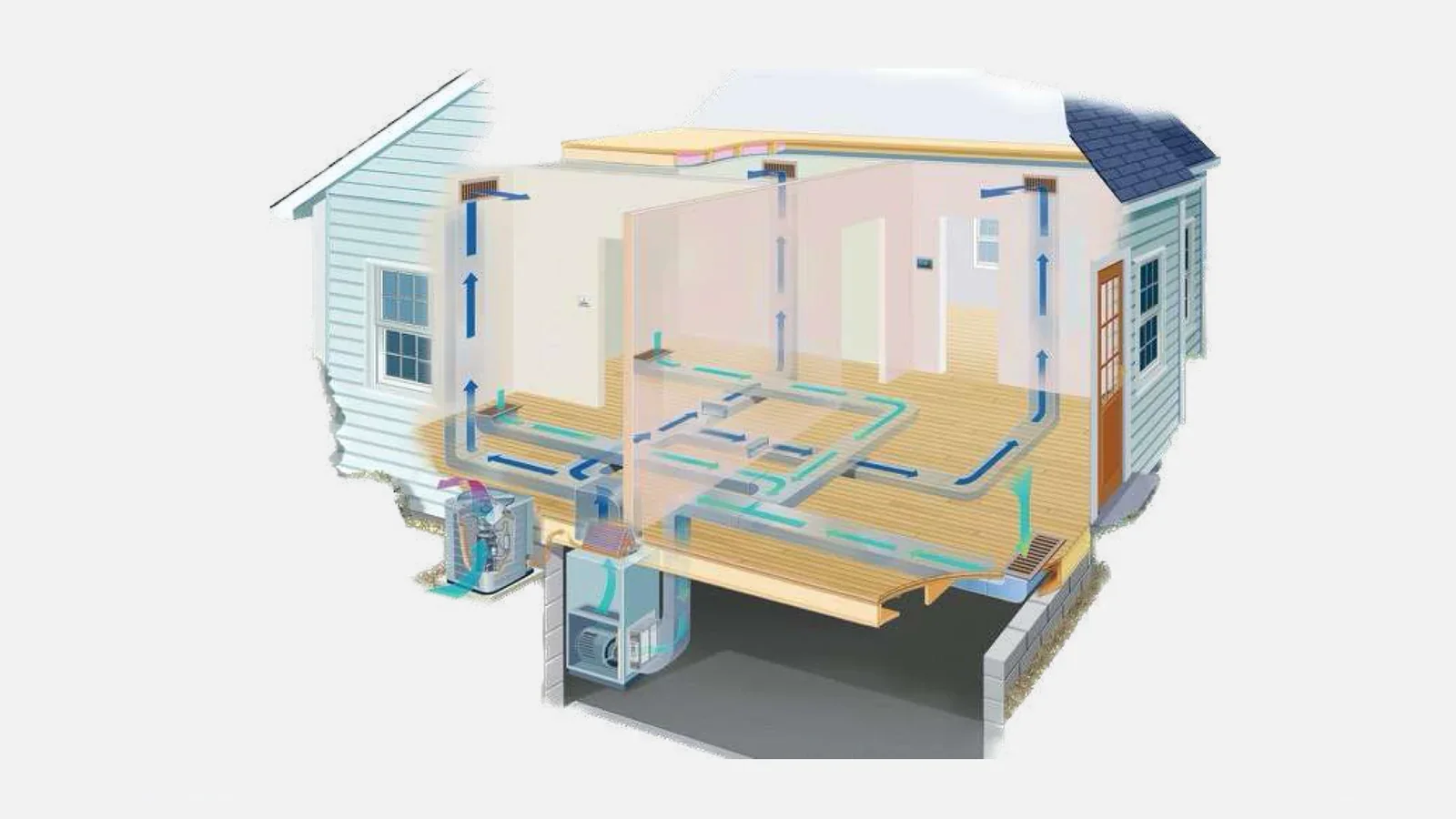
Example of combining ventilation with air conditioning
Combining ventilation with air conditioning

Installing separate ventilation and air conditioning systems

For smaller rooms, houses, or properties where powerful air conditioning is not required, installing separate ventilation and air conditioning systems may be considered as a more effective and economical solution.
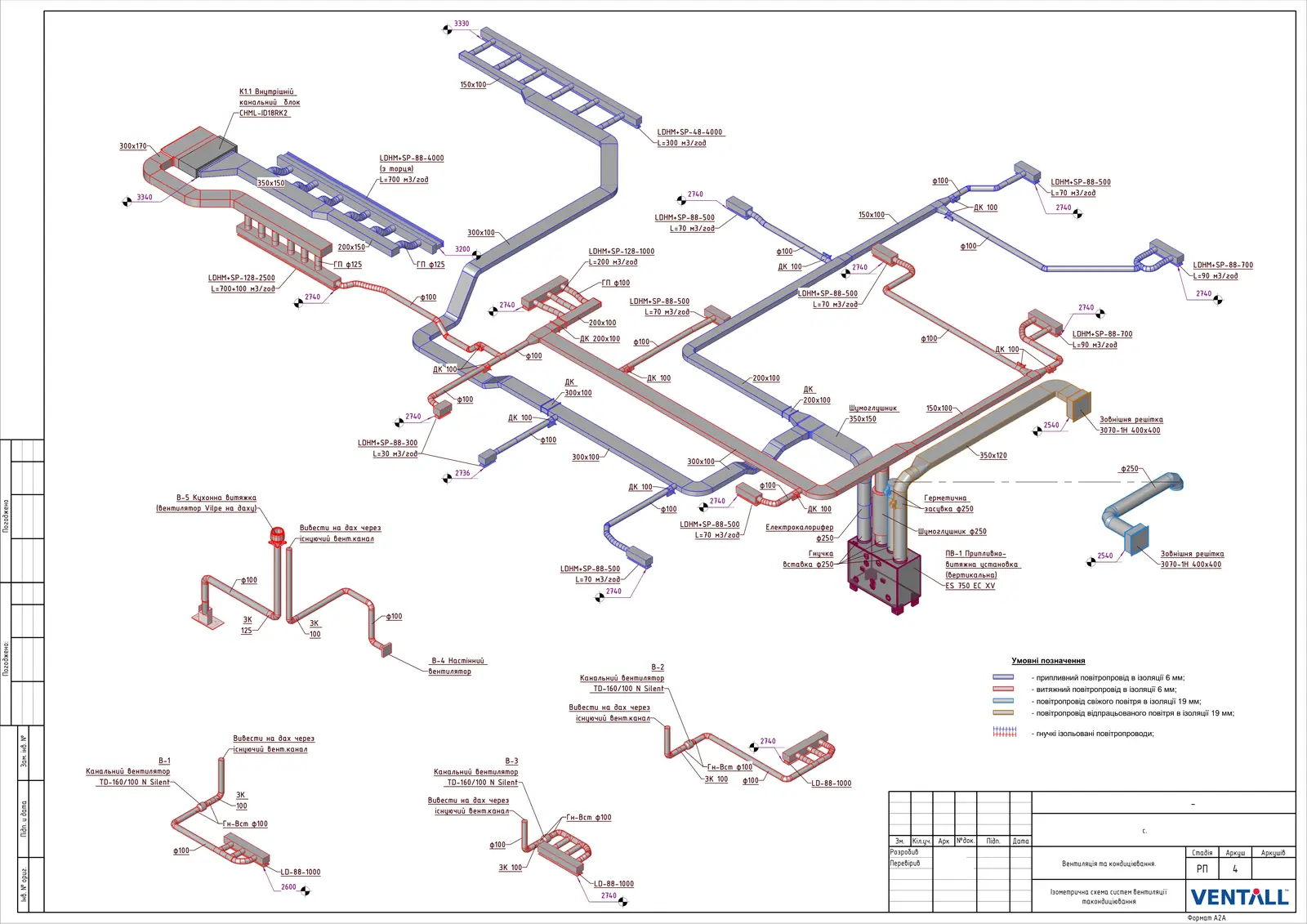
Isometric diagram of air ducts for ventilation and air conditioning systems
Air duct isometry (WD 4)

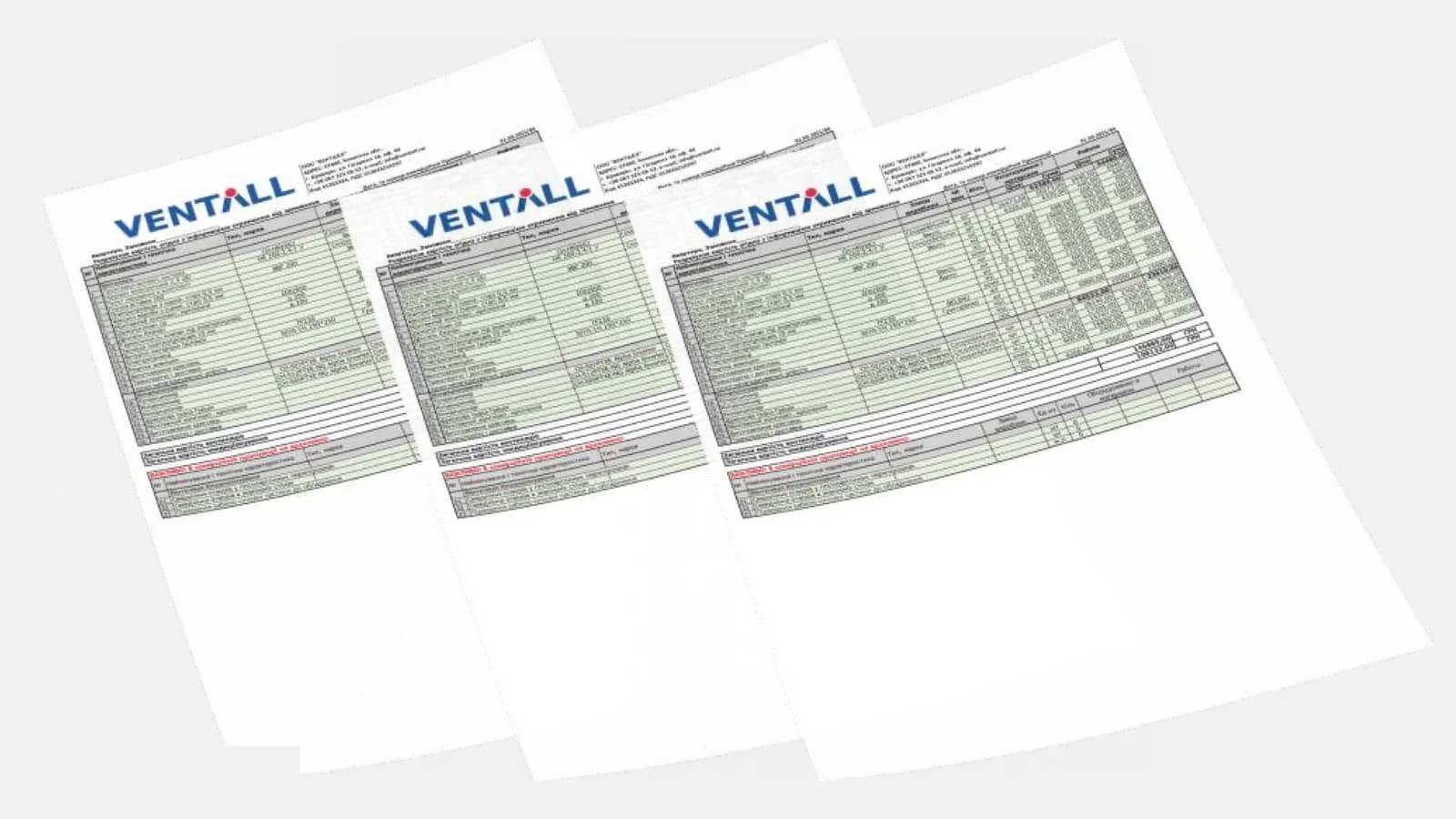
Concept and estimate

Concept, pre-design estimate (commercial proposal)

Cost assessment and planning are especially important. Here is why this matters:
  • Cost feasibility:
  • Budget planning:
  • Assessment of material and equipment costs:
  • Comparison of options.
Example of a pre-design estimate for ventilation and air conditioning systems
Example of a pre-design estimate

Cost feasibility

Before implementing ventilation and air conditioning systems, it is important to determine whether they are financially feasible. Cost assessment helps determine whether investing in such a system will be worthwhile.

Budget planning

A financial estimate defines the expected costs of installing and operating the ventilation and air conditioning system. This helps ensure that sufficient funds are available and helps avoid financial difficulties.

Assessment of material and equipment costs

Determining the costs of required equipment, pipelines, fans, air conditioners, and other components makes it possible to define the project cost accurately.

Comparison of options

Financial assessment can help compare different ventilation and air conditioning system options and choose the optimal one from a financial feasibility perspective.

Design

Design steps and specifications for the ventilation and air conditioning system

  • Studying the room layout
  • Calculating air, heat, cooling, and humidity loads
  • Preparing drawings
  • Preliminary drawings and coordination
  • Approved drawings
  • Preparing specifications

These steps help create a detailed design and ensure that the ventilation and air conditioning system will meet all requirements and needs of the building or room.

Studying and planning rooms

Study the building or room plan where the system will be installed. Define the purpose of each room and the possibility of placing equipment and air ducts.

Calculating air, heat, cooling, and humidity loads

Perform calculations that include air quantities, air conditioning volumes, heating and ventilation, and humidity level to provide optimal comfort and efficiency conditions.
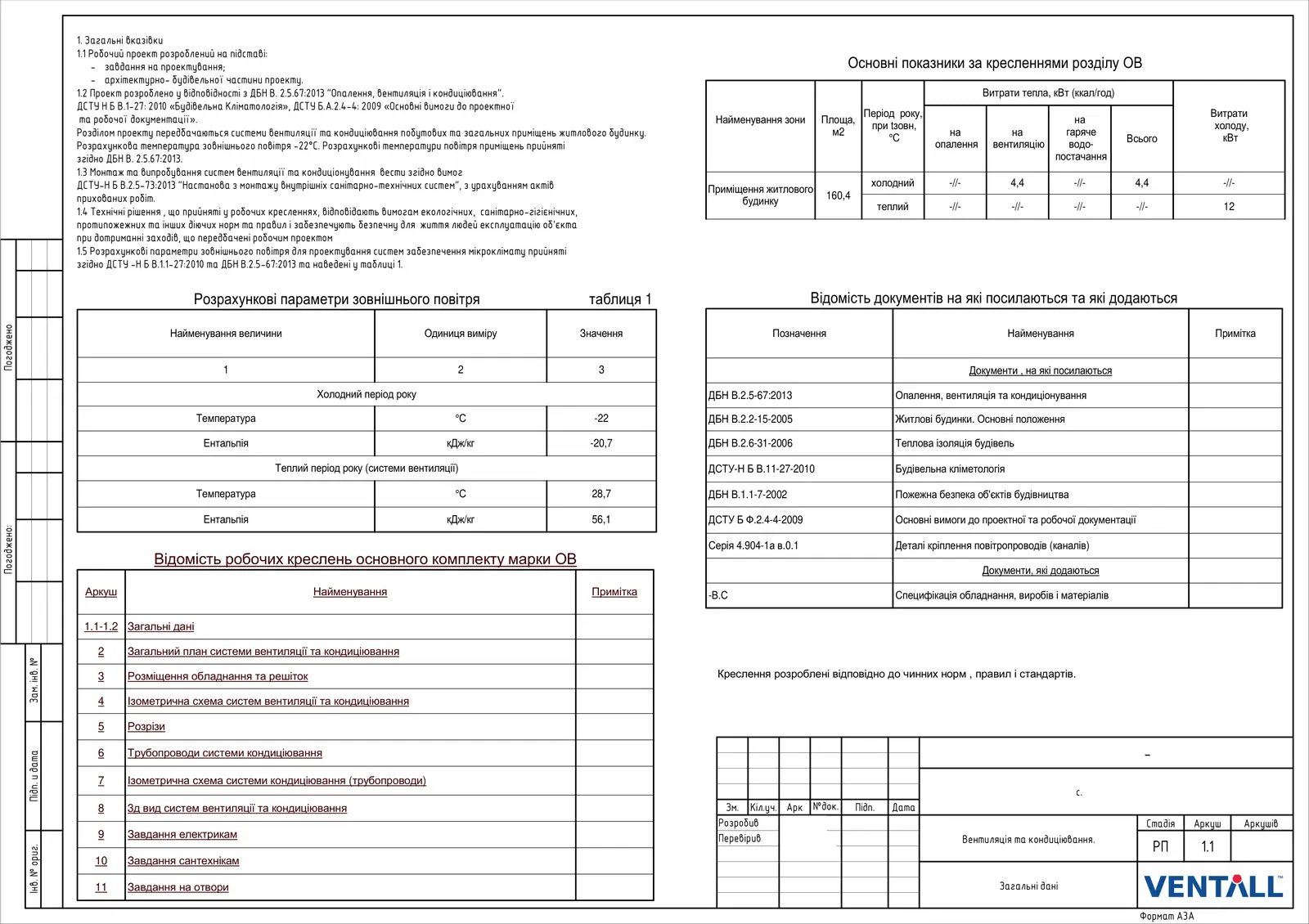
General data of an HVAC project with calculated outdoor air parameters
General project data (WD 1.1)More about the HVAC project example

Preparing drawings

Develop system drawings that include equipment placement, air ducts, and additional elements. These drawings are important for visually understanding the project.
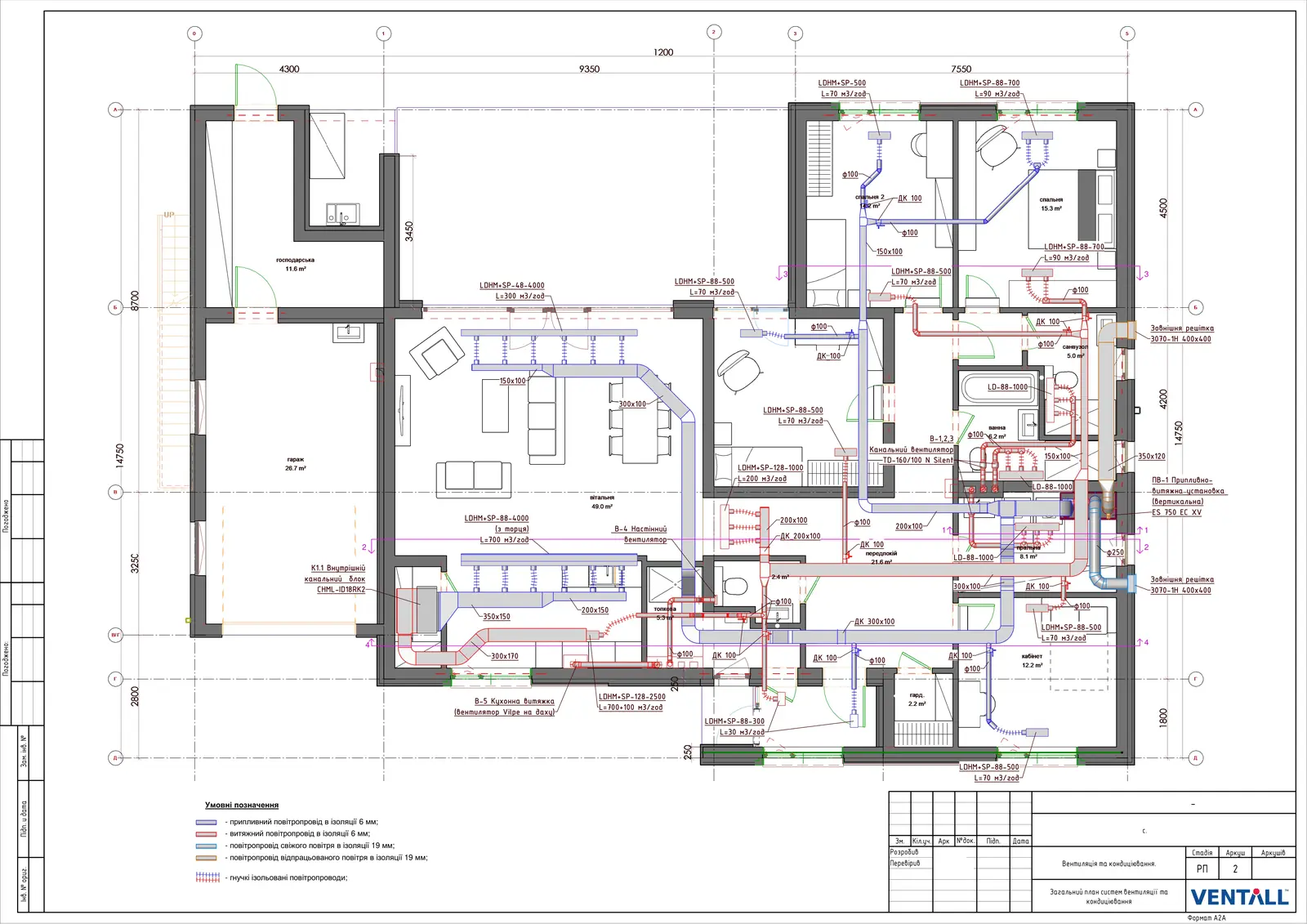
General plan of ventilation and air conditioning systems in a house
General system plan (WD 2)

Preliminary drawings and coordination

After preparing preliminary drawings, present them for approval by the client or relevant authorities. Take into account possible corrections and required changes.

Approved drawings

After all changes and corrections are taken into account, develop the final approved drawings. This is a detailed map for installation, considering architectural features, design, and all technical aspects of the project.

Preparing specifications

Based on the approved drawings, develop technical specifications that define the requirements for equipment and materials in detail. Specifications are important for equipment selection and suppliers.
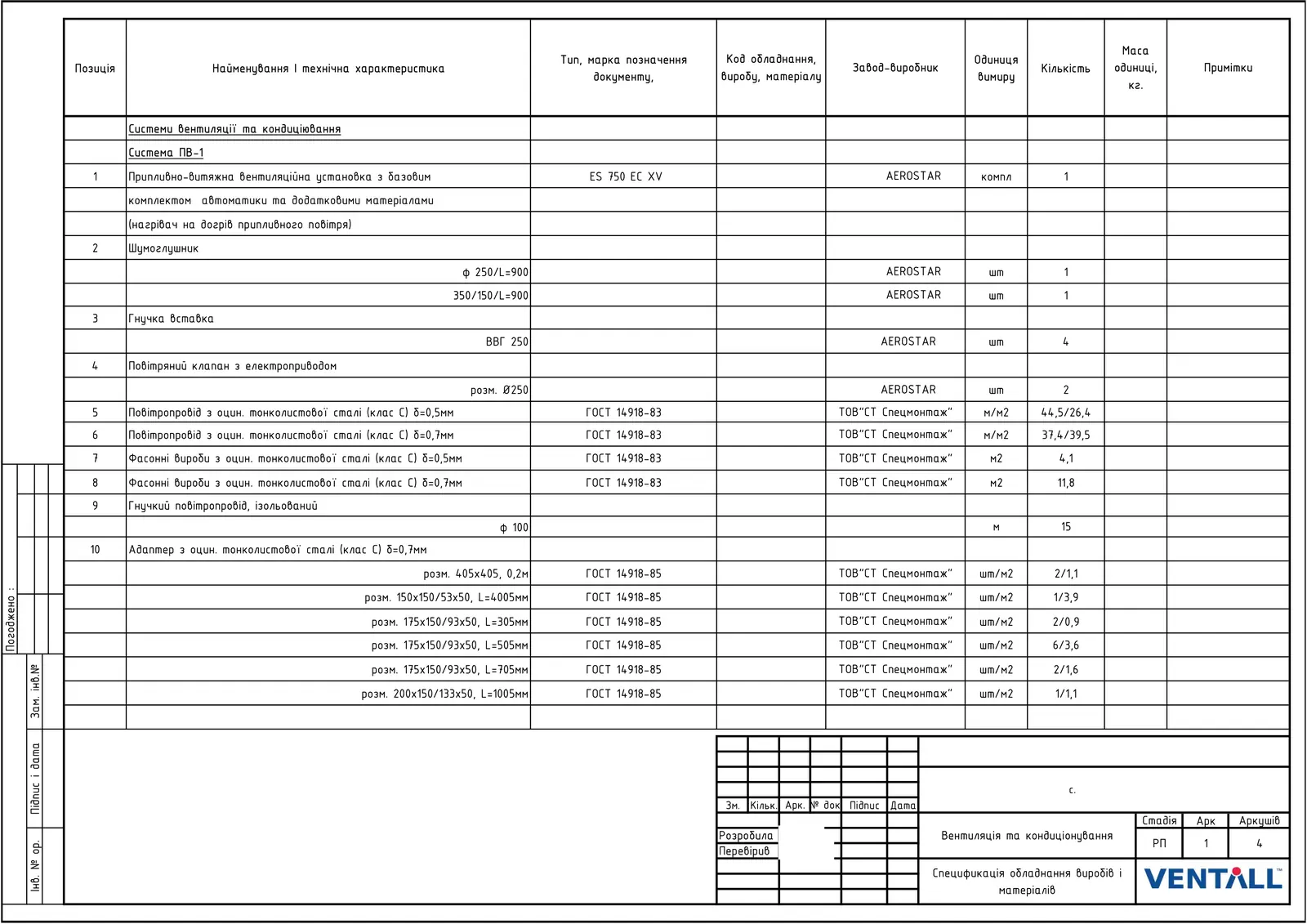
Specification of materials for ventilation and air conditioning systems
Material specification, part 1

Installation

Installation and commissioning works

Installation and commissioning of a ventilation and air conditioning system require compliance with regulations, technical requirements, and a professional approach to ensure system reliability and efficiency. The installation process is as follows:

  • Preparatory works
  • Equipment installation
  • Air duct installation
  • Connection of utilities
  • Commissioning
  • Testing and measurements
  • User training
  • Documentation

Preparatory works

Before starting installation, ensure that the building or room meets all design and technical requirements. This includes preparatory works such as creating installation openings, installing support structures for equipment, and connecting the required utilities.

Equipment installation

Install outdoor units (compressors) and indoor units (fan coils, recirculation units, ventilation devices) according to the design drawings and specifications. Connect all pipelines, electrical connections, and control connections.
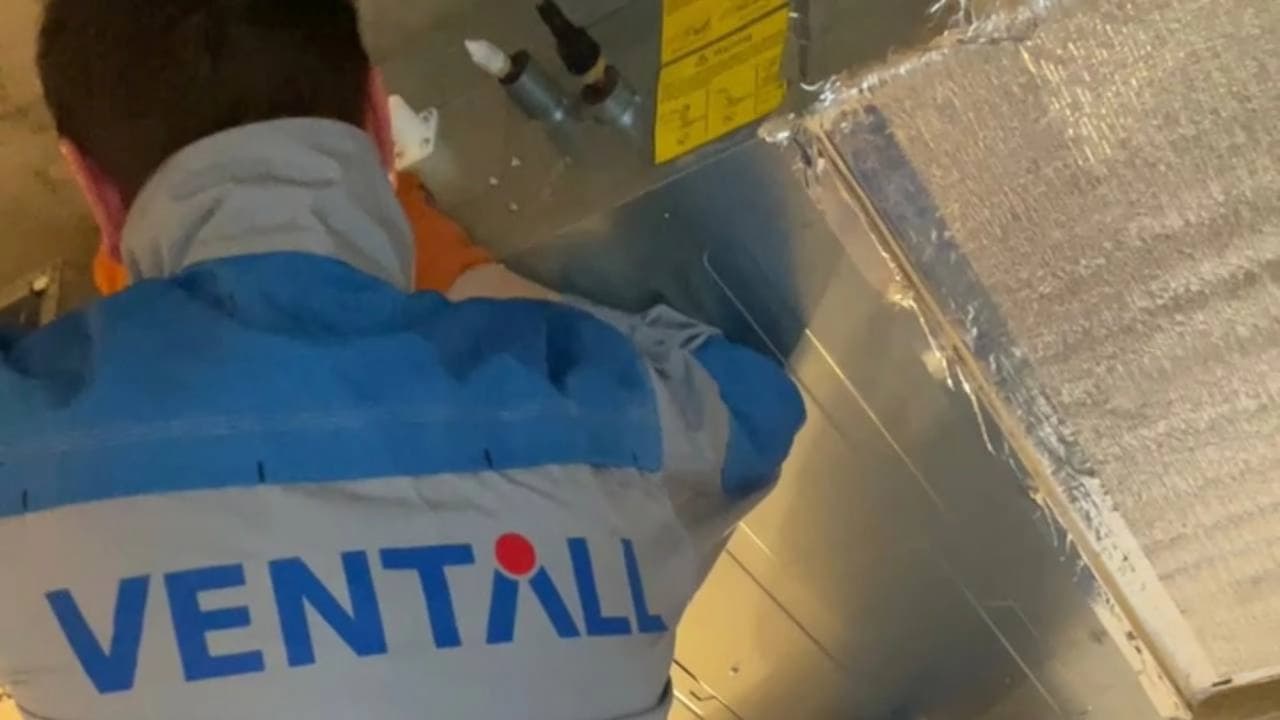
Installation and connection of ventilation equipment on site
Equipment installation: installation, piping, and service access checkMore about ventilation and air conditioning installation

Air duct installation

Install and connect air ducts and channels for air distribution in the rooms. It is important to follow the calculated dimensions and airtightness requirements to ensure system efficiency.
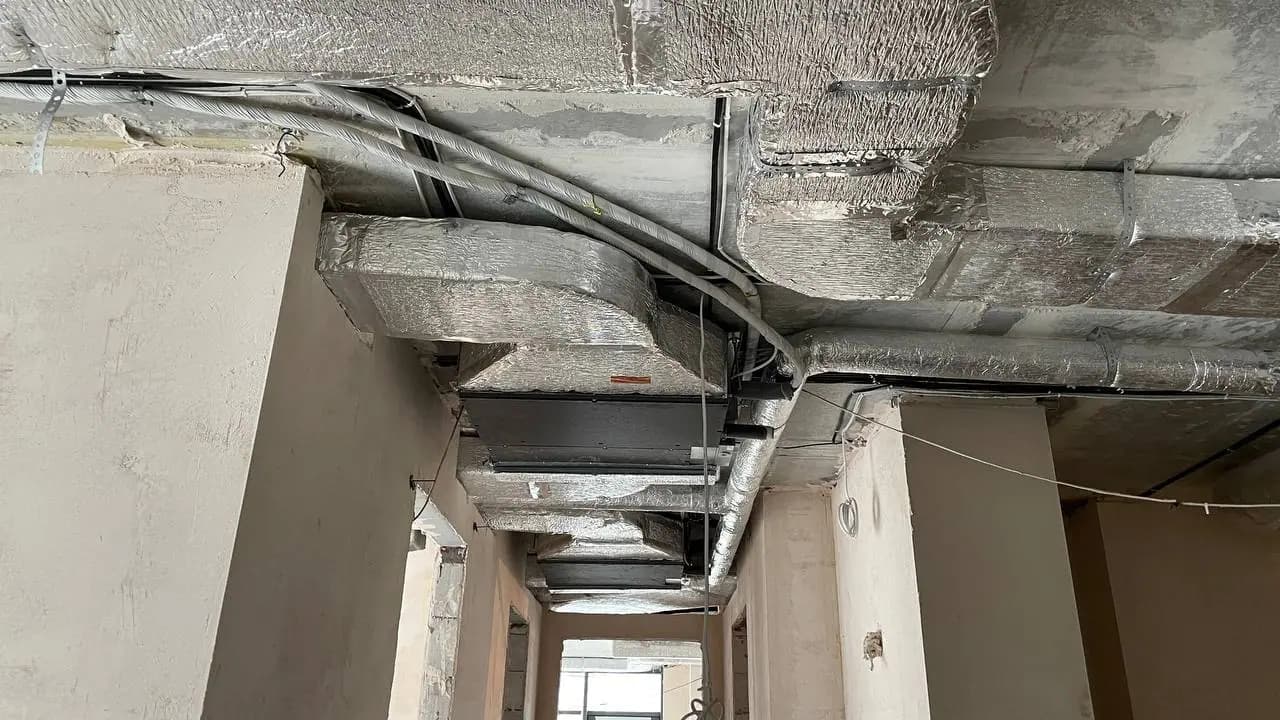
Installation and connection of air ducts under the ceiling on site
Air duct installation: route installation, duct connections, and airtightness controlMore about ventilation and air conditioning installation

Connection of utilities

Connect all required utilities, including power supply, water supply if required for air conditioning, control interfaces, and automation.

Commissioning

After equipment installation and utility connections, perform commissioning. This includes setting system parameters, checking equipment operation, and identifying and correcting possible defects.

Testing and measurements

Perform test starts of the system and carry out the required measurements, such as air volume, temperature indicators, humidity level, and so on. It is important to make sure that the system meets the design characteristics and quality standards.

User training

Provide system operation training to owners or building operators to ensure correct and efficient use of the system.

Documentation

Keep all required documentation, including service manuals, and carry out regular technical maintenance.

Warranty and service

Warranty cases and service maintenance

  • Warranty: an important written agreement with the manufacturer or installer that covers equipment and materials.
  • Regular service maintenance: inspection and maintenance of filters, fans, heat exchangers, and other components to ensure efficient operation.
  • Scheduled inspections: recommended annual inspections to identify possible problems.
  • Manufacturer support: keep contact with the manufacturer to receive support and advice.
  • Timely repairs: do not postpone repairs when noticeable problems appear.
  • Professional services: contact specialists for complex service maintenance and repairs.

Summary

Choosing ventilation and air conditioning for a house or apartment is best started with the needs of the rooms, budget, requirements for air quality, noise, energy consumption, installation, and further service. The final decision should be made after consulting specialists and evaluating the specific property.

Related scenarios

Related scenarios for houses and apartments

If you need a shorter material for a specific property type, go to a separate scenario.

Let’s start with your project

Leave your contact and we will get back to discuss the right solution for your project.

Articles · 2026-05-13
How to choose a ventilation or air conditioning system for a house or apartment | Ventall