Offices, stores, gyms
For these facilities, occupancy, operating schedules, comfort, noise, automation, service access, and integration with cooling are important.

How ventilation is planned for offices, retail spaces, gyms, public areas, and selected healthcare or education facilities.
Commercial HVAC
Healthcare and education facilities require a separate review of sector-specific requirements. It is more accurate to speak about project-specific verification of parameters than about universal “compliance with all standards”.
Logic
An office, store, gym, school, healthcare space, restaurant, hotel, and parking area have different operating schedules, occupancy, odors, noise limits, automation requirements, and service needs.
These facilities cannot be treated as one identical scenario. It is important to separate comfort ventilation for occupants from special requirements for kitchens, healthcare zones, educational spaces, gyms, or parking areas.
Segments
For these facilities, occupancy, operating schedules, comfort, noise, automation, service access, and integration with cooling are important.
For such facilities, requirements depend on the room function and the project. A generic ventilation scheme or a promise of “compliance with all standards” is not enough.
These are separate scenarios with their own requirements for exhaust, odors, noise, automation, safety, parking ventilation, or service.
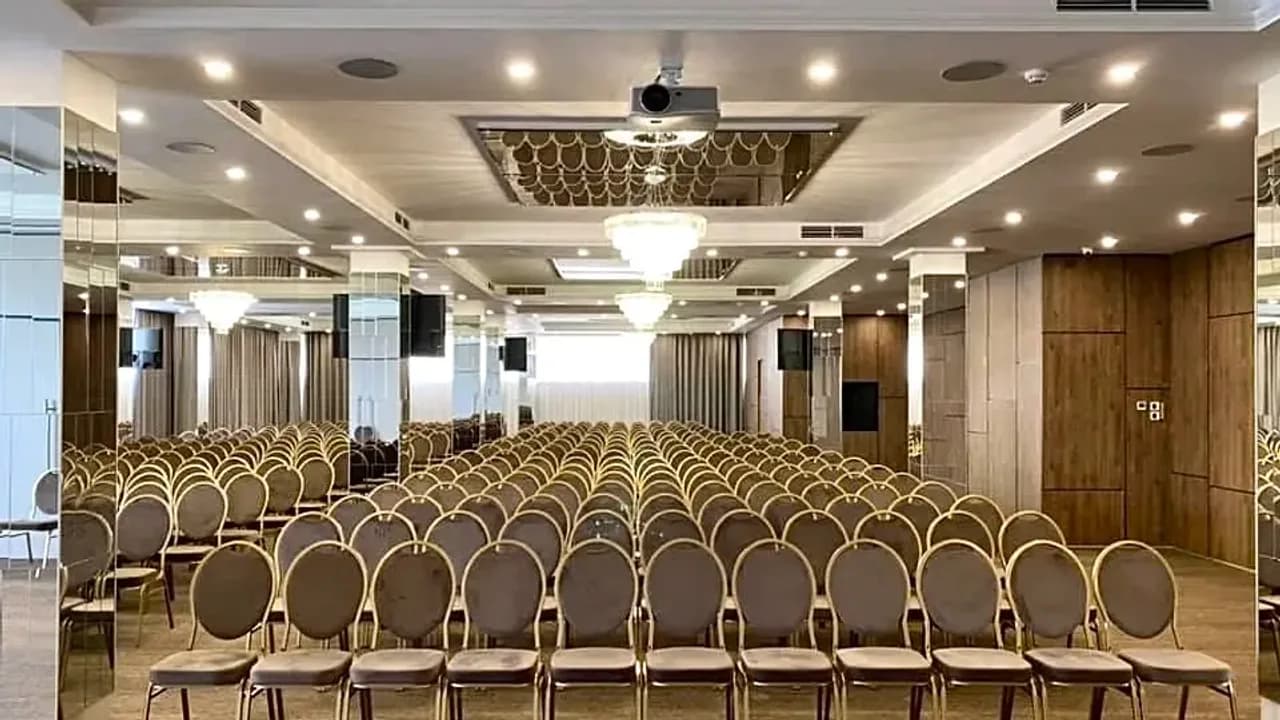
Real Ventall project example: Bratislava Hotel: ROTOR ventilation at 9,000 m³/h and a chiller-fan coil system for conference halls.
View hotel projectDesign
Projects
Ventilation of office and auxiliary spaces at 1,000 m³/h per floor, multi-zone cooling, and a small server room.
View office projectSupply and exhaust ventilation for a shelter at 6,000 m³/h using AEROSTAR equipment.
View school projectA large public facility with VTS ventilation at 6,000 m³/h and a Haier multi-zone system of approximately 80 kW.
View center projectStandards and checks
During design, the general requirements for heating, ventilation, and air conditioning are checked, including DBN V.2.5-67:2013, as well as specialized DBNs, sanitary requirements, and documents for the specific room type.
EN 16798-1 / ISO 17772-1 can be used as a framework for indoor environmental quality, while EN 12599 / DSTU EN 12599:2025 are useful for the logic of system verification and handover.
Do not promise “compliance with all standards” without a specific project. It is more accurate to explain which parameters must be checked: air exchange, noise, filtration, automation, access points, and operating mode.
Next
If you are evaluating an office, store, gym, or public facility, the logical next step is design, because that is where people, zones, supply air, exhaust air, noise, automation, and service are defined.
If the facility has substantial cooling demand or process zones, the logical next step is the article on cooling systems or industrial ventilation, not one generic service.
Related
Leave your contact and we will get back to discuss the right solution for your project.