Ventilation
Helps remove humid air, odors, and excess CO2, but does not address the root causes of mold, leaks, thermal bridges, or process-related humidification.

How humidity is assessed in HVAC systems: dehumidification, humidification, condensation, process humidity, warehouses, food production, and service.
Humidity control
It is important to understand when ventilation is enough, when dehumidification is needed, when humidification is needed, and when the problem is related to the building envelope, leaks, thermal bridges, or the process.
Parameter
The same relative humidity can mean different risks depending on temperature, operating conditions, and room type. Housing, a swimming pool, a cheese production facility, a warehouse, a cold room, or a process zone will all require a different selection approach.
That is why “40-60%” should not be presented as a universal rule for every facility. Before selecting a system, temperature, relative humidity, moisture sources, occupants or process, supply and exhaust air, condensation, drainage, automation, and service are checked.
Scenarios
Helps remove humid air, odors, and excess CO2, but does not address the root causes of mold, leaks, thermal bridges, or process-related humidification.
Required for swimming pools, food production, warehouses, cold rooms, or process spaces where ventilation is not enough or needs to work together with a dehumidifier.
Considered for rooms where process, material, or comfort requirements exist, but it requires water treatment, automation, service, and equipment documentation.
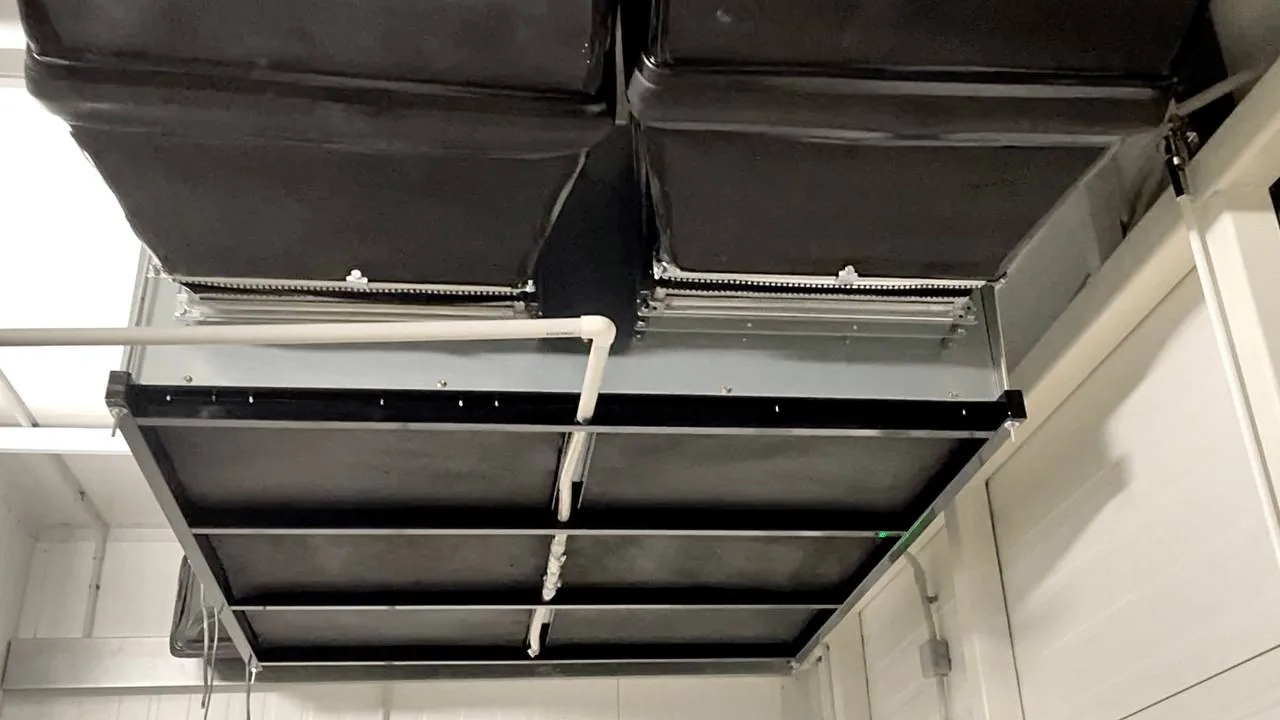
Real Ventall project example: TASbio: 3,000 m³/h ventilation, 3 Cooper&Hunter dehumidifiers, and air conditioning up to 30 kW.
View TASbio projectChecks
Examples
Food production: dehumidification, ventilation, and air conditioning. This is a direct real project example for the humidity-control scope.
View TASbio projectStable climate, Haier multi-zone system, redundancy, and alarm systems. This example shows control of storage conditions, not a separate dehumidification unit.
View warehouse projectFor warehouses, cold rooms, and storage zones, stable temperature, humidity control, condensation, redundancy, and alarms are important. If there is no separate dehumidification project, these scenarios should be described without tying them to a specific equipment capacity.
Standards and checks
WHO guidance on dampness and mold confirms the framework: persistent dampness and microbial growth should be prevented or minimized. But ventilation or a dehumidifier do not remove the cause of mold by themselves and do not replace elimination of the moisture source.
During design, the general requirements for heating, ventilation, and air conditioning are checked, including DBN V.2.5-67:2013, as well as specialized documents for the specific facility type. EN 16798-1 / ISO 17772-1 can be used as a framework for indoor environmental parameters, while swimming pools, SPA areas, or food production require separate specialized requirements.
All equipment figures must come from equipment documentation and include conditions: temperature, relative humidity, model, operating conditions, capacity, and service requirements.
Next
If the task is related to a warehouse, food production, cold room, or process, the logical next step is industrial scenarios or cooling scenarios.
If the system has already been implemented by Ventall, service should be planned immediately: drainage, filters, automation, sensors, dehumidifiers, or humidifiers do not operate stably without a service procedure.
Related
Leave your contact and we will get back to discuss the right solution for your project.